
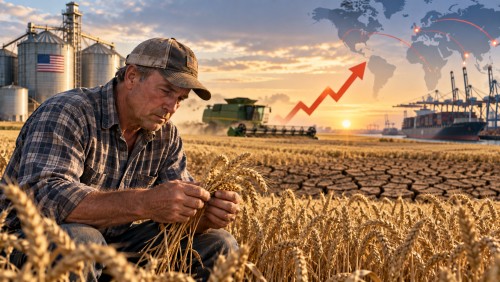
Amid a backdrop of global uncertainty in agriculture, US wheat prices have surged to a three-year high, driven by a combination of challenging weather conditions, escalating production costs, and geopolitical tensions. However, these increased prices are not necessarily translating into higher profits for American farmers, who are grappling with a slew of adverse factors.
In the southern Great Plains, particularly in Kansas, persistent drought has severely impacted wheat crops, with some farmers facing total harvest losses. The dry conditions, exacerbated by higher diesel and fertilizer costs, are eroding potential financial gains from the elevated wheat prices. As a result, the profitability of wheat farming remains under significant pressure despite the price hikes.
Globally, concerns about wheat supply are mounting due to continued drought across the US and Europe. Furthermore, the potential influence of El Niño could introduce additional risks, affecting crop yields in major wheat-producing regions. While El Niño might bring about wetter conditions to parts of the southern Great Plains, the overall uncertainty it introduces adds to the challenges faced by farmers.
The geopolitical landscape is also playing a crucial role in the wheat market. Disruptions in the Black Sea region, a key corridor for international grain shipments, have complicated the transport of wheat, leading to increased costs and contributing to the upward pressure on global prices. Damage to port facilities in this area has further strained the supply chain, amplifying concerns over food security.
These combined factors of reduced harvests, unpredictable weather, and export route disruptions are likely to have a cascading effect on food prices, given wheat’s central role in staple foods like bread. While some US farmers may consider expanding wheat acreage in response to higher prices, the long-term trend of declining wheat production persists as many opt for more lucrative crops such as corn and soybeans.
Ultimately, for wheat prices to provide a genuine financial boon to farmers, they must remain robust enough to outweigh the rising costs of production and the inherent risks posed by the current climate and market conditions. The outlook for the next growing season hinges on factors such as rainfall, crop yields, and the dynamic state of global grain markets.