
In West Penwith, the winter solstice is a time when the past feels remarkably close. Inside the Tregeseal stone circle, the granite blocks appear like “pale, inquisitive ghosts” against the darkening sky. This area, known for its legends of pixies and demons, becomes a place of “marvellous natural theatre” as the sun sets over the distant Isles of Scilly.
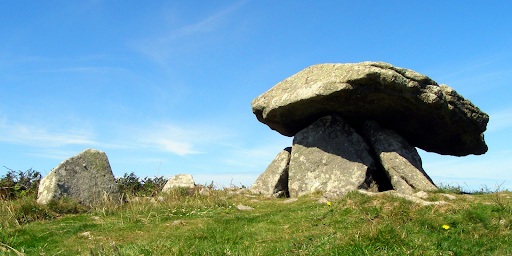
The Land’s End peninsula is often described as an “ancient winter solstice landscape.” This isn’t just a poetic description; it’s an astronomical fact. The granite ridges align perfectly with the midwinter sunset, allowing sites like Chûn Quoit to act as solar markers. For the people who built these structures, the solstice was a moment of profound spiritual and practical importance.
The Kenidjack holed stones remain one of the most puzzling features of this landscape. These low-lying stones with small apertures may have served as a “countdown calendar,” catching the sun’s rays in a specific way as December 21st approached. This allowed the ancient inhabitants to “track the sun’s movement” and find hope in the return of the light.
The modern interpretation of these ancient themes is found in the Montol festival. Held in Penzance, this “darkly magical” celebration revives the old custom of guise dancing. Participants wear masks and veils to hide their identities, dancing “triumphantly” around a flaming sun. It is a night of “misrule” that honors the ancient cycle of the seasons.
The solstice in West Cornwall is ultimately a celebration of resilience. As the Mock (Yule log) is paraded down to the sea in a trail of fire, the community acknowledges the darkness while looking forward to the “bright new year ahead.” Whether through silent meditation at a standing stone or a “wild night” in Penzance, the return of the light remains a powerful focal point.