
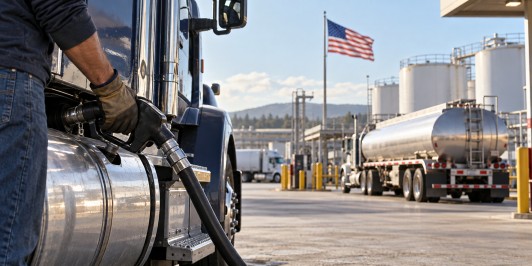
As diesel prices in the United States climb to record highs, the Trump administration is considering a temporary 90-day ban on diesel exports to boost domestic fuel supplies and mitigate rising costs. The proposed export restriction aims to retain more diesel within the country, potentially easing pressure on prices. However, experts caution that the measure’s effectiveness may be limited due to existing challenges within the US fuel distribution system.
The uneven distribution of diesel supplies is a significant concern, with much of the nation’s refining capacity concentrated along the Gulf Coast. This leaves regions like the Northeast and West Coast facing shortages. Existing pipelines are operating near capacity, complicating efforts to redistribute fuel efficiently across the country. Alternative transportation methods, such as shipping diesel by water, could be slower and more costly, potentially diminishing the impact of increased domestic supplies on regional prices.
Global market dynamics further complicate the situation, as US diesel prices are influenced by international fuel prices and supply conditions. Refineries are financially incentivized to export diesel when international prices are higher, creating a delicate balance between domestic supply and global demand. Recent global tensions, such as disruptions linked to the Iran war and attacks on Russian refining capacity, have exacerbated the situation by tightening global fuel supplies.
Historically, the United States has employed energy export restrictions during periods of market stress, such as the crude oil export limitations following the 1973-74 Arab oil embargo. These measures were designed to enhance domestic energy security and were gradually lifted as US oil production surged. While a temporary diesel export ban could increase domestic availability in the short term, its overall impact remains uncertain and would rely heavily on factors like refinery production, transportation capacity, regional demand, and global fuel prices.
Ultimately, while the proposed export ban might provide some relief to the US diesel market, it is unlikely to fully address the broader supply and pricing challenges currently affecting the sector. As the administration weighs its options, energy analysts continue to highlight the complexities and potential unintended consequences of such a policy move.