
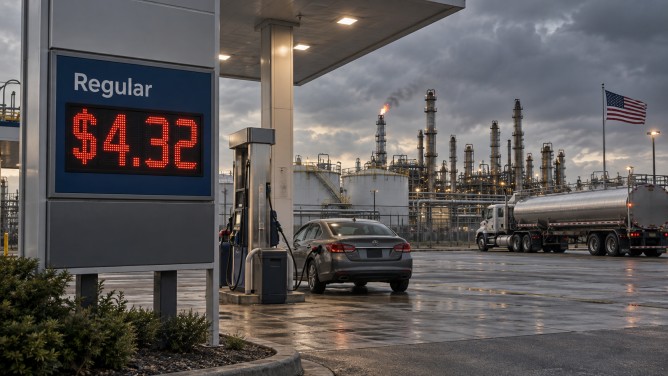
The global energy landscape is experiencing heightened volatility, primarily driven by geopolitical tensions in critical regions like the Middle East and Eastern Europe. These developments are having a profound impact on the United States, where the average price of regular gasoline has surged to $4.32 per gallon, according to the latest data from the US Energy Information Administration.
This sharp increase, occurring over just two weeks, represents a nearly 25-cent rise, significantly higher than the $3.18 per gallon recorded around the same time last year. The main contributor to this spike is the instability in the global crude oil market, exacerbated by conflicts involving countries such as Iran and Ukraine, which have raised concerns about potential disruptions to oil supplies.
Diesel prices are also hitting record highs, putting additional strain on transportation and shipping sectors. This escalation in diesel costs is expected to ripple through the economy, increasing the cost of moving goods and potentially driving up consumer prices in various sectors.
Typically, gasoline prices in the United States tend to decrease in the fall as refiners transition from the more costly summer-grade fuel to the cheaper winter-grade formulations. However, analysts caution that the ongoing geopolitical risks may hinder the usual seasonal decline in fuel prices this year.
Compounding the issue is the reduced capacity of the US Strategic Petroleum Reserve, which has less emergency oil available compared to previous years following significant withdrawals. This limitation could impede the government’s ability to mitigate another major supply disruption, should one occur.
Energy experts anticipate continued fluctuations in fuel prices as the situation in the Middle East and the Russia-Ukraine conflict continues to evolve. While any seasonal decrease in gasoline prices may offer temporary relief, ongoing supply risks could keep prices elevated for the foreseeable future.