
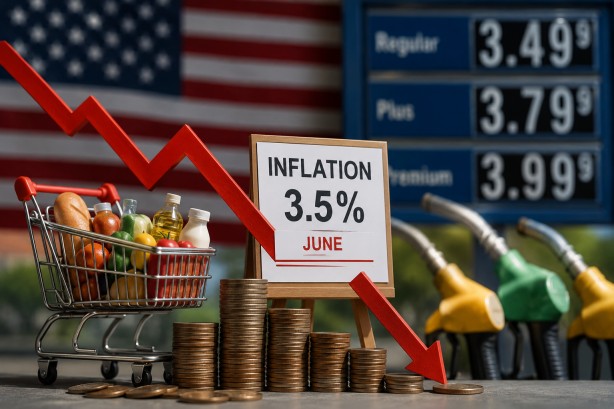
The United States experienced a slowdown in annual inflation in June, with rates dropping to 3.5%. This decline was largely attributed to a temporary decrease in energy prices, which helped lower overall consumer costs. Recent figures from the Consumer Price Index (CPI) indicate that inflation diminished after previously reaching higher levels. Prices saw a 0.8% decrease from May, driven by reductions in gasoline and fuel prices. These decreases helped to counterbalance rising costs in areas such as food, housing, utilities, and other daily expenses.
Core inflation, a metric that excludes the often volatile food and energy sectors and is closely watched by the Federal Reserve, saw a slight reduction to 2.6% on a year-over-year basis. Despite this easing, experts caution that it may be a temporary reprieve. Global oil prices have begun to climb again due to renewed tensions in the Middle East, leading to increased fuel costs for consumers and higher operating expenses for industries like aviation and transportation.
This evolving economic landscape presents a challenging scenario for the Federal Reserve, which is set to evaluate the latest inflation data in conjunction with labor market conditions during its upcoming policy meeting later this month. Although the inflation rate has shown signs of moderation, it still surpasses the central bank’s long-term goal of maintaining a 2% rate, contributing to uncertainty about when future adjustments to interest rates might occur.
As the situation unfolds, the interplay between global geopolitical factors and domestic economic indicators will likely play a significant role in shaping the Federal Reserve’s decisions. The fluctuating oil prices serve as a reminder of the unpredictable nature of inflationary pressures, complicating efforts to establish stable economic policies. Stakeholders will be watching closely to see how these dynamics impact both consumers and industries moving forward.