
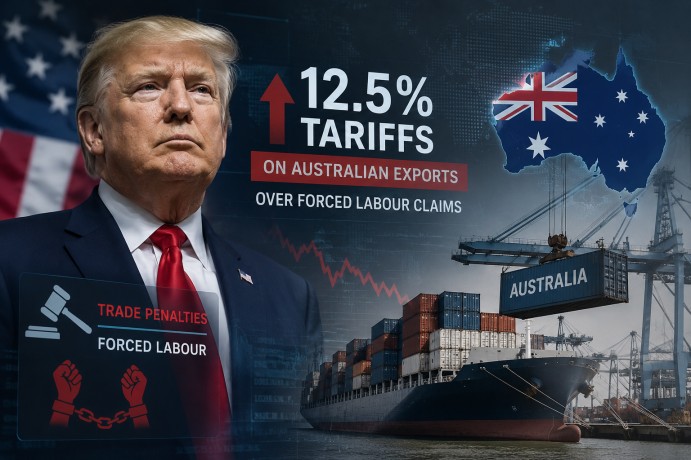
The United States has announced the introduction of a 12.5% tariff on numerous Australian exports, citing shortcomings in Australia’s efforts to prevent the inclusion of goods made with forced labor in global supply chains. This decision has sparked a vehement response from the Australian government, which has labeled the tariffs as unwarranted and in contradiction to the terms of the Australia-U.S. Free Trade Agreement. Trade Minister Don Farrell emphasized that Australia upholds some of the most stringent laws globally against forced labor and modern slavery, and he has called for the immediate removal of these tariffs by Washington.
The newly imposed tariff affects a broad spectrum of Australian exports. However, certain major export categories, such as beef, gold, multiple agricultural products, aircraft parts, and some mineral and industrial items, have been exempted from this measure. Despite these exemptions, the overall impact on trade has raised significant concerns among Australian officials, who claim that the United States’ actions are unsupported by evidence and could potentially damage the trade relations between the two nations.
Australian business groups and industry leaders have joined the government in criticizing the U.S. decision. They describe the tariffs as inequitable and detrimental to Australian exporters, who may face increased challenges in the international market due to these new trade barriers. The move has also prompted discussions about the potential economic implications for both countries, given their longstanding trade partnership.
This development comes amid broader efforts by the Trump administration to expand trade measures aimed at addressing forced labor concerns in various countries. Such measures reflect a growing scrutiny over international supply chains and the ethical sourcing of goods. However, the specific targeting of Australian exports has raised eyebrows, with Australian leaders questioning the rationale behind the United States’ decision and urging a reconsideration to avoid unnecessary strain on bilateral ties.