
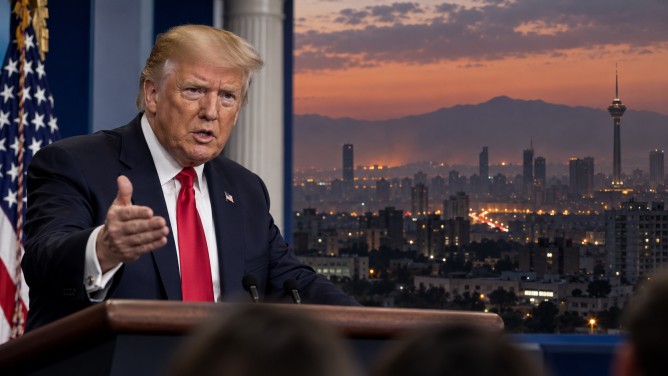
In the ongoing conflict between the United States and Iran, US President Donald Trump has reiterated the potential for an intensified military response, emphasizing that Washington remains committed to preventing Tehran from developing nuclear weapons. This assertion comes amid mounting tensions, as Iran has threatened to extend its retaliatory measures to US and Israeli targets, including military bases and civilian infrastructure in neighboring West Asian countries.
During a press briefing on Thursday, Trump highlighted the US’s efforts to weaken Iran’s military capabilities but noted that further military action could be taken if necessary. Despite the conflict’s escalation, he expressed optimism about a resolution, suggesting that a conclusion could stabilize oil and gasoline markets, which have been affected by the ongoing hostilities.
The conflict, which commenced in late February, has significantly heightened tensions across the region, impacting the Strait of Hormuz—a vital channel for global oil and gas shipments. The threat of attacks on shipping lanes and energy infrastructure has raised alarms regarding regional security and the stability of international energy supplies.
Iranian officials, including Foreign Minister Abbas Araghchi, have warned that any renewed attacks by the US or Israel could provoke retaliatory strikes against American military installations and regional infrastructure. Previous Iranian strikes have reportedly damaged US military and diplomatic sites, as well as energy and industrial facilities in countries such as Bahrain, the United Arab Emirates, and Qatar.
Military assessments indicate that Iran maintains a substantial ballistic missile capability and may be working to restore production capacities using existing resources and underground facilities. Concurrently, the United States, Israel, and their regional allies face pressure on their defense systems amid ongoing security challenges.
Diplomatic efforts to resolve the conflict remain at an impasse, with the situation around the Strait of Hormuz continuing to pose threats to global energy markets and commercial shipping. The interplay of President Trump’s warnings and Iran’s threats of broader retaliation underscores the uncertainty surrounding the conflict’s future trajectory and its potential ramifications for regional stability and global oil prices.