
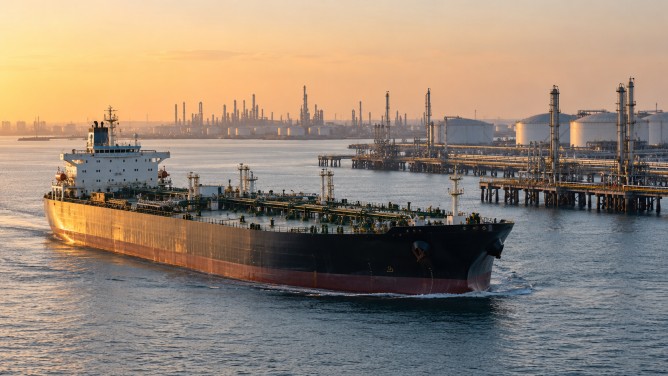
Global oil prices have surged to their highest point in five months, driven by escalating tensions in the Gulf region that threaten to disrupt crude supplies. On Thursday, Brent crude rose by 3%, reaching $112 per barrel, marking its highest level since mid-May. This increase follows a series of attacks in Saudi Arabia and incidents involving vessels near the Strait of Hormuz, a critical passage for global oil transportation.
The recent spike in prices comes after Yemen’s Houthi movement launched attacks on various targets in Saudi Arabia, resulting in the deaths of four individuals and injuries to eight others. Among the targets were a civilian airport in Dammam and a drone attack on an oilfield. Concurrently, Iran’s Islamic Revolutionary Guard Corps reported striking four vessels in the northern Gulf, accusing them of illegal oil transfers. Additionally, three vessels encountered mines west of the Strait of Hormuz, compounding fears of further maritime disruptions.
The heightened tensions have renewed concerns over the security of the Strait of Hormuz, through which a significant portion of the world’s oil supply is transported. Previous disruptions in this vital corridor had already caused oil prices to climb sharply, peaking at $126 per barrel in April before temporary relief appeared with prospects of a ceasefire.
Despite a recovery in oil exports from the Persian Gulf to levels above those seen before the conflict, alternative routes through the Red Sea and Gulf of Oman have somewhat mitigated shipping interruptions. However, the recent attacks have injected uncertainty into global supply stability, influencing financial markets worldwide.
Stock indices in Europe and Asia saw declines on Thursday amid fears that rising energy costs could exacerbate inflation and sustain high borrowing costs. In the United States, American Airlines’ shares fell following the company’s warning that surging fuel expenses could lead to a financial loss this year, underscoring the broader economic implications of increased oil prices.