
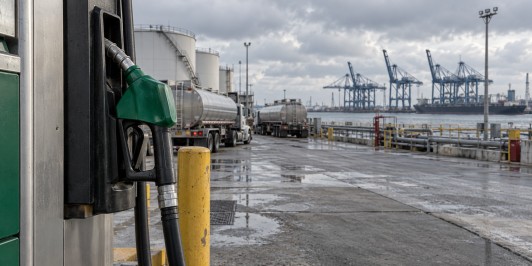
The United States is grappling with record-high diesel prices amid global disruptions in fuel supplies, influenced by ongoing conflicts in Iran and Ukraine. With the cost of diesel reaching a staggering $6.53 per gallon, the U.S. government is considering measures to address the surging prices. Among these options is the restriction or banning of diesel exports, a proposal backed by President Donald Trump.
During a discussion prior to meeting with Ukrainian President Volodymyr Zelenskyy, Trump emphasized the significant domestic production of diesel in the U.S. and the potential benefits of retaining more of this fuel for domestic use. The administration, led by Treasury Secretary Scott Bessent, is currently evaluating the feasibility of implementing a full or partial ban on diesel exports, taking into account the nation’s refining capabilities.
The urgency of the situation is heightened by concerns over the impact of Ukrainian military actions targeting Russian oil refineries. Trump expressed apprehension that such strikes could exacerbate the damage to refining infrastructures, potentially driving diesel prices even higher.
However, the idea of restricting diesel exports has drawn caution from industry experts. The American Fuel and Petrochemical Manufacturers association has warned that any export limitations might lead U.S. refiners to cut back on production, which could inadvertently cause a reduction in the domestic supply of both diesel and gasoline.
As energy costs continue to climb, the U.S. administration is carefully weighing the possible outcomes of introducing export restrictions. The decision is critical, as it seeks to alleviate domestic economic pressures while avoiding unintended negative consequences on the broader fuel market.