
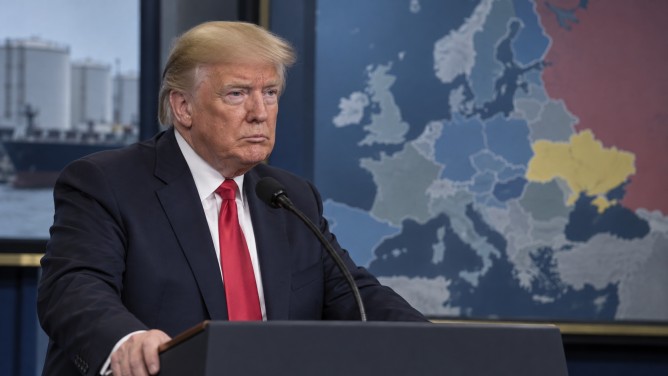
Amid escalating fuel costs driven by global energy supply disruptions, former US President Donald Trump announced an agreement with Russian President Vladimir Putin to supply significant quantities of Russian diesel to international markets. This development has sparked criticism from Ukrainian President Volodymyr Zelenskyy, US lawmakers, and European allies.
The deal involves Russia providing over 300,000 tonnes of diesel initially, with further shipments expected. Trump argues that such an agreement could alleviate rising fuel prices in the United States and elsewhere, offering relief to farmers, ranchers, and transport operators feeling the squeeze from increased costs. The backdrop to this agreement includes the war in Iran and the closure of the Strait of Hormuz, both contributing to the spike in energy prices.
Ukrainian President Zelenskyy has voiced strong disapproval of the agreement, labeling it unfair and potentially advantageous for Russia in its ongoing conflict with Ukraine. He warns that purchasing Russian fuel may bolster Moscow’s resources, thereby undermining international efforts to pressure Russia into ending the war. Zelenskyy also fears that this deal might overshadow diplomatic discussions between Ukraine, the US, and European officials aimed at resolving the conflict.
Within the US, the agreement has been met with criticism from both Democratic and Republican lawmakers. Democrats contend that buying Russian fuel could counteract recent sanctions aimed at curbing Moscow’s energy revenues. Republicans share concerns about the potential for increased revenue to support Russia’s military actions against Ukraine.
This agreement was made public during ongoing meetings between US, Ukrainian, and European representatives discussing resolutions to the war. The announcement risks complicating diplomatic efforts and straining relations between Washington and Kyiv further.
While Trump defends his decision as a necessary step to reduce energy costs for American consumers, the proposed influx of Russian diesel raises questions about balancing domestic economic concerns with the broader geopolitical stance against Russia’s actions in Ukraine.