
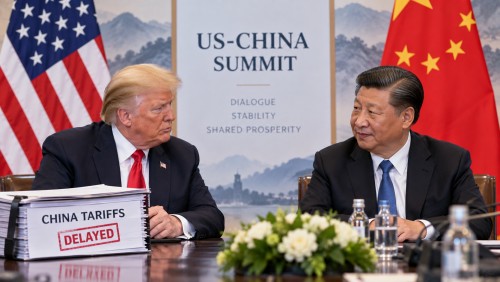
As tensions simmer in the global trade arena, the United States is strategically delaying the announcement of new tariffs on China and other major trading partners. This move comes as US President Donald Trump and Chinese President Xi Jinping prepare for a pivotal meeting, anticipated to be a critical juncture in US-China economic relations.
The US administration had been poised to unveil a trade report targeting China’s excess industrial capacity, with recommendations potentially including a 7.5% tariff on Chinese goods. Such measures would significantly hike the overall US tariff rate on Chinese imports to approximately 20%. This level aligns with a threshold previously tolerated under the existing trade truce between the two nations, a truce that both sides are keen to maintain.
In anticipation of the leaders’ summit, scheduled to be Xi’s first visit to the United States since 2023, negotiators from both countries are expected to engage in discussions to forge potential agreements. The Trump administration’s tactical postponement of the tariff announcement appears designed to maximize leverage in these negotiations, keeping the threat of additional tariffs as a bargaining chip.
Earlier this year, in March, the Trump administration initiated investigations into more than a dozen key trading partners under Section 301 of the Trade Act of 1974. These investigations focus on concerns surrounding excess production capacity, with any resultant tariffs likely to add pressure to China’s trade dynamics.
China has issued warnings about possible retaliatory actions should US tariffs exceed levels established during the current trade truce. Chinese officials have consistently argued against using excess capacity as a rationale for protectionist trade measures, advocating for a more balanced approach to resolving economic disputes.
As both nations aim to secure trade commitments ahead of the Trump-Xi meeting, tariffs remain a central issue. The outcome of these negotiations could significantly shape future US-China economic interactions, underscoring the high stakes involved in this diplomatic engagement.